Article
Building Closed-Loop Decision Agents: Moving from Passive BI Dashboards to Active Goal-Directed Workflows
Cross-posted. This article's canonical home is Alex Merced's Lakehouse Blog.
Dashboards are excellent at showing people what happened. They are less good at deciding what should happen next.
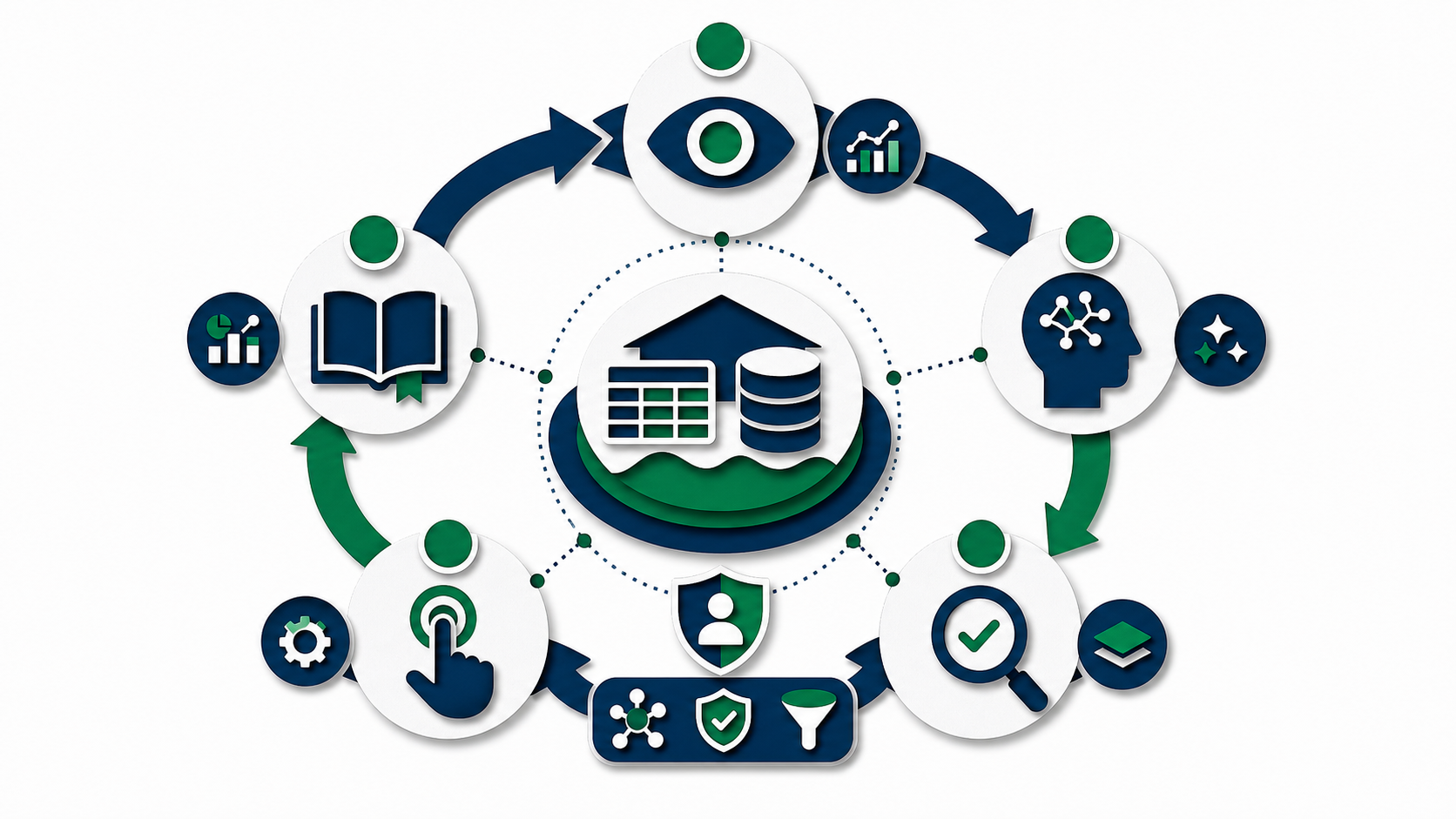
That gap is where closed-loop decision agents enter the conversation. A closed-loop agent can observe a signal, reason about what it means, validate the evidence, and request or perform an approved action. The loop might monitor demand changes, detect pipeline failures, recommend inventory adjustments, flag account risk, or trigger a workflow when a metric crosses a boundary.
The key word is approved. Closed-loop analytics is not an excuse to let a model roam through operational systems. The agent needs constraints, semantic grounding, policy checks, validation steps, audit trails, and human approval where risk demands it.
This is where the lakehouse becomes more than a passive reporting layer. A trusted lakehouse can provide the data, metric definitions, lineage, query execution, and governance that active agents need. Without that foundation, closed-loop workflows are just automation wrapped around uncertain data.
The Dremio-positive conclusion is that active analytics makes open, governed, high-performance lakehouse architecture more compelling. Agents need a reliable context layer before they can responsibly move from insight to action.
From Dashboards to Loops
Traditional BI is human-centered. A dashboard refreshes. A person sees a number. The person interprets the signal, asks follow-up questions, and decides whether to act. This model works, but it depends on attention. If nobody looks at the dashboard, nothing happens.
Closed-loop analytics changes the pattern. The system monitors goals or constraints continuously. When a signal changes, it investigates. If the evidence is strong enough, it recommends or triggers a response.
The loop has five parts.
Observe. The agent watches metrics, events, logs, or data-quality signals.
Reason. The agent forms a hypothesis about what changed.
Validate. The agent tests the hypothesis against trusted data, metric contracts, and constraints.
Act. The agent recommends or initiates an approved workflow.
Learn. The system records outcomes and improves future thresholds, rules, or playbooks.
This is not only a user-interface change. It is an operating-model change.
Why Passive BI Is Not Enough
Passive BI assumes a person will notice the right thing at the right time. That assumption breaks down when the business moves quickly or signals are numerous.
A revenue dashboard may show a regional drop. A product dashboard may show a feature adoption change. A data-quality dashboard may show freshness failure. A cost dashboard may show unusual spend. Each dashboard may be accurate, but none of them guarantees action.
Closed-loop agents can help by turning important signals into workflows. If usage drops for a strategic account, an agent can gather context, compare cohorts, inspect support tickets, and recommend customer-success outreach. If a pipeline fails, an agent can inspect lineage, identify affected dashboards, and open a remediation workflow. If cloud spend spikes, an agent can compare workload patterns and request a scaling adjustment.
The value is not that the agent replaces human judgment. The value is that it reduces the time between signal and structured response.
The Data Foundation
A closed-loop agent is only as good as the data foundation it observes. If metrics are inconsistent, the loop will chase noise. If data is stale, the agent may act on old information. If lineage is missing, the agent may not know which downstream assets are affected. If access policies are weak, the agent may see too much.
The foundation should include open tables, governed catalogs, semantic metrics, quality checks, and audit logs. It should make the agent's observations explainable.
This is why lakehouse architecture matters. Apache Iceberg can provide table history and open table semantics. Catalogs can govern discovery. Query engines can execute analytical checks. Semantic layers can define metrics. Agent tools can expose approved operations.
Closed-loop workflows should not be built on dashboard screenshots or raw database credentials. They should be built on governed data products.
Metric Contracts in the Loop
Metric contracts are critical because closed-loop agents act on thresholds. A threshold without a clear metric definition is dangerous.
If an agent monitors churn risk, it needs to know which churn metric applies. If it monitors cloud cost, it needs to know whether credits, reserved capacity, or internal allocations are included. If it monitors product usage, it needs to know which events count as active use.
The contract should define formula, grain, dimensions, freshness, owner, tests, and access rules. The agent should retrieve the contract before evaluating the signal.
This prevents a common failure mode: the agent responds to a metric that looks important but is not valid for the requested decision.
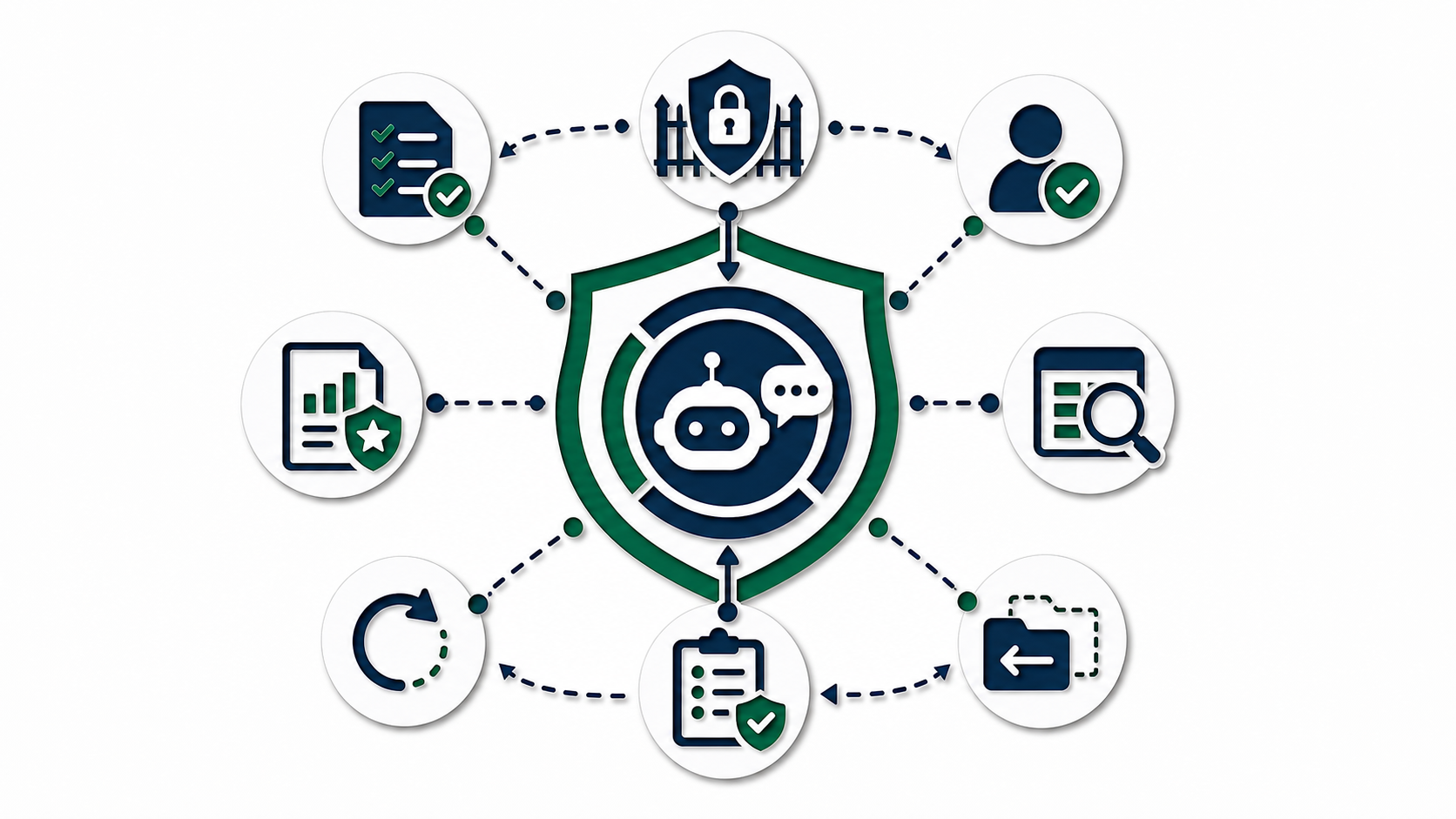
Guardrails for Tool Calls
Closed-loop agents need tools, but tools create risk. A tool can query data, open tickets, update configurations, send messages, trigger pipelines, or call external APIs. Each tool should have a clear purpose and boundary.
A low-risk tool might retrieve a metric definition. A moderate-risk tool might run a governed query. A higher-risk tool might open an incident ticket. A very high-risk tool might change a production configuration.
The platform should treat these differently. Some tools can run automatically. Some require policy checks. Some require human approval. Some should be unavailable to agents entirely.
Tool calls should be logged with identity, input, output, policy decision, and correlation to the original user or workflow. If an action causes a problem, the organization needs to reconstruct why it happened.
Validation Before Action
The most important design principle is validation before action.
An agent should not act on a single surprising number. It should check freshness, data quality, historical baselines, related metrics, and possible upstream issues. It should ask whether the signal is real, material, and actionable.
For example, if revenue appears to drop in one region, the agent should check whether the data pipeline refreshed correctly, whether the region mapping changed, whether a large customer was reclassified, and whether the drop appears in related metrics.
If a model detects unusual demand, the agent should compare inventory, recent promotions, seasonality, and data latency before recommending procurement changes.
Validation is what separates closed-loop analytics from reflex automation.
Human Approval and Risk Tiers
Not every action needs the same approval. A closed-loop system should define risk tiers.
Tier one actions are informational. The agent summarizes a signal or adds context to a dashboard.
Tier two actions create internal workflow artifacts. The agent opens a ticket, drafts a message, or creates a task.
Tier three actions affect business process state. The agent changes a forecast, adjusts a priority, or updates a routing rule.
Tier four actions affect external systems, customers, money, or production infrastructure. These require strong approval, rollback, and monitoring.
This tiering lets teams adopt closed-loop patterns gradually. Start with recommendations and internal tasks. Move toward higher-risk actions only after the data, validation, and audit model is proven.
A Practical Example
Imagine an agent monitoring product usage for enterprise accounts. It observes that weekly active usage dropped for a high-value account. Instead of sending an alert immediately, it investigates.
First, it checks the metric contract for active usage. Then it checks freshness and data-quality status. Next, it compares usage across products, users, regions, and historical baselines. It checks support ticket volume and recent account changes through approved tools. It identifies that the drop is concentrated in one integration and began after a recent configuration change.
The agent then drafts a customer-success task with evidence, affected users, likely cause, and recommended next step. It does not message the customer directly. A human reviews and approves outreach.
This loop is valuable because it turns a dashboard signal into a structured response without skipping accountability.
The Lakehouse Control Plane
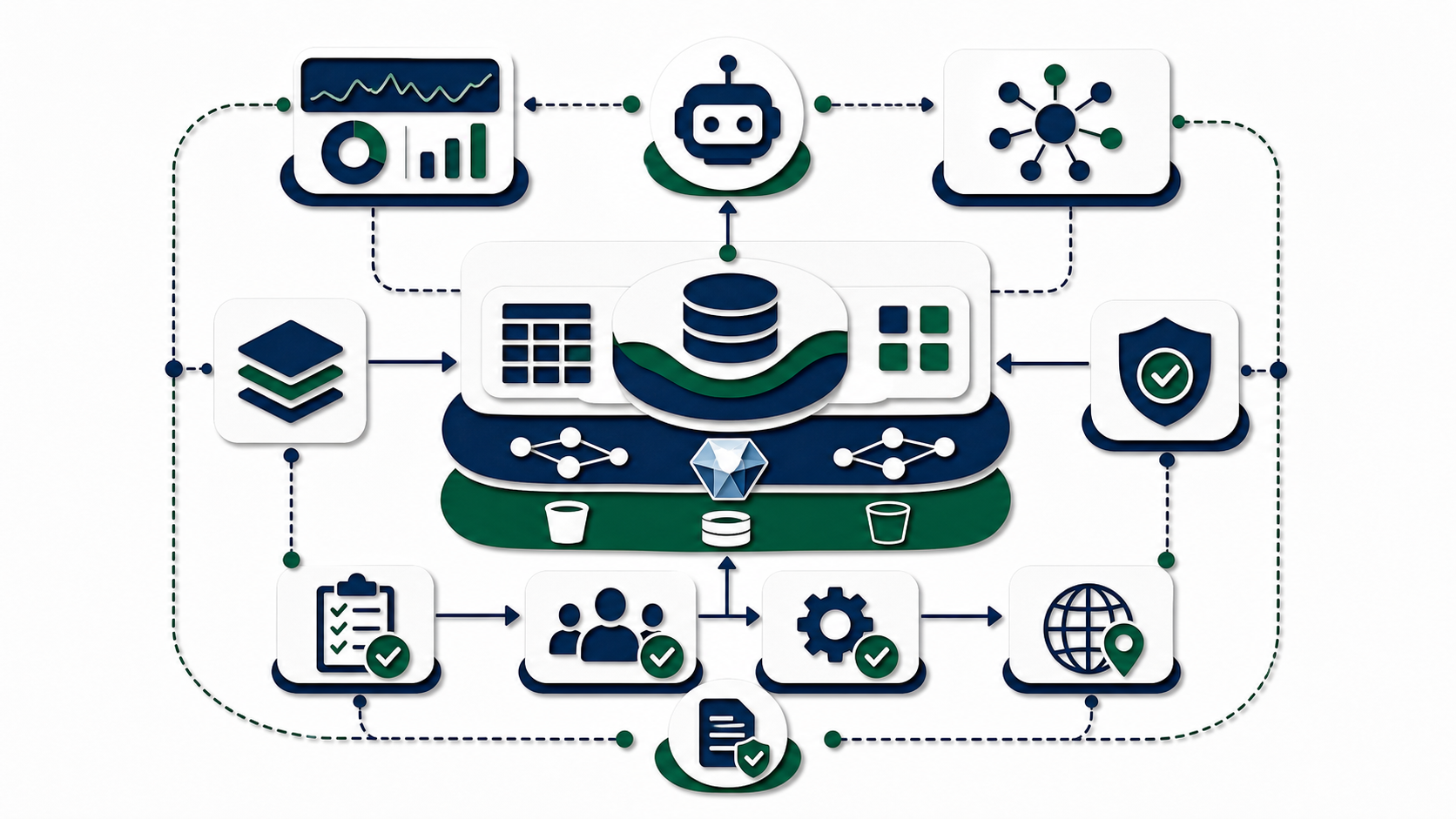
Closed-loop agents need a control plane. The control plane defines what the agent can observe, query, validate, and act on.
The lakehouse should provide trusted data and semantic definitions. The catalog should provide discovery and governance. The query engine should provide governed execution. The policy system should enforce access. The workflow system should manage approvals. The audit system should record the loop.
This architecture lets agents operate with boundaries. The agent does not own the lakehouse. It uses the lakehouse as a governed context layer.
Dremio and the Active Analytics Direction
Closed-loop analytics is favorable to the Dremio Lakehouse approach because it requires more than a dashboard. It requires fast access to open data, query federation, semantic consistency, and governed tool surfaces.
If the agent needs to inspect data across SaaS systems, operational databases, and Iceberg tables, federation matters. If it needs to understand metrics, semantic layers matter. If it needs to run several checks quickly, acceleration matters. If it needs to explain the evidence, lineage and audit matter.
The conclusion is not that every workflow should be autonomous. The conclusion is that active analytics needs a stronger data foundation than passive BI.
Implementation Checklist
Start with one workflow. Do not try to automate every dashboard.
Choose a workflow with clear metrics, clear owners, and reversible actions.
Define metric contracts before building the agent.
Classify tools by risk.
Require validation before action.
Log every tool call.
Add human approval for meaningful operational changes.
Measure false positives and missed signals.
Review outcomes with business owners.
Expand only when the loop proves reliable.
Failure Modes
The first failure mode is noisy alerts. If the agent reacts to every fluctuation, users will ignore it.
The second is weak validation. Acting on stale or low-quality data is worse than doing nothing.
The third is unclear ownership. Someone must own the workflow, metric, and action policy.
The fourth is broad tool access. Agents should not receive more authority than the task requires.
The fifth is missing rollback. Every meaningful action needs a recovery plan.
The sixth is poor auditability. If the organization cannot explain the loop, it cannot trust it.
Designing the Observation Layer
The observation layer should not watch every metric with equal urgency. Closed-loop systems need signal prioritization.
Start by classifying metrics by business impact and actionability. A metric is a good candidate for closed-loop monitoring when it has a clear owner, reliable definition, known baseline, meaningful threshold, and a plausible response. If no one knows what action should follow a change, the agent should not be asked to automate the response.
The observation layer should also distinguish between leading indicators and lagging indicators. A lagging revenue drop may be important, but a leading usage drop, pipeline failure, or customer behavior shift may create more time to act.
Freshness matters too. A loop that checks a daily metric every five minutes creates noise. A loop that checks a near-real-time signal once per day may miss the window for action. The cadence should match the metric.
The agent should also know when not to alert. If a data-quality check fails, the system should pause or qualify the signal. If a holiday or known business event explains the pattern, the agent should include that context.
Designing the Reasoning Layer
The reasoning layer should be structured. A closed-loop agent should not simply see an anomaly and produce a paragraph. It should follow an investigation playbook.
For each monitored signal, define common hypotheses. A usage drop might be caused by product outage, customer churn, seasonality, tracking failure, permission changes, or normal variance. A cost spike might be caused by workload growth, failed caching, retry loops, new data volume, or pricing changes.
The agent can test these hypotheses with approved queries and tools. It can inspect related metrics, lineage, freshness, support signals, deployment events, and historical baselines.
This is where semantic context helps. The agent needs to know which related metrics matter and which comparisons are valid. Without that, the reasoning layer becomes guesswork.
The best reasoning layer is transparent. The agent should show which hypotheses it tested and which evidence supported the conclusion.
Designing the Action Layer
The action layer should be the most constrained part of the system. A good pattern is to separate recommendations, requests, and execution.
Recommendations are informational. The agent proposes what should happen and why.
Requests create a workflow item. The agent opens a ticket, drafts a message, or asks for approval.
Execution changes a system. The agent calls an API, adjusts a configuration, pauses a pipeline, or updates a business process.
Most teams should begin with recommendations and requests. Execution should come only after the loop has proven reliable and the action has strong rollback controls.
Actions should also have preconditions. For example, a pipeline repair action may require failed quality checks, known lineage impact, no active deployment freeze, and owner approval. A customer-success action may require account ownership, recent usage decline, and no open duplicate task.
The agent should not decide these rules from scratch. They should be encoded in workflow policy.
Evaluation and Continuous Improvement
Closed-loop agents need evaluation beyond answer quality. The organization should measure the loop.
Track true positives. How often did the agent identify a real issue?
Track false positives. How often did it create noise?
Track false negatives. Which important issues did it miss?
Track time to detection. Did the loop find the issue faster than human monitoring?
Track time to response. Did the workflow lead to action sooner?
Track action quality. Did the recommended or approved action help?
Track user trust. Did owners accept, modify, or reject recommendations?
Track cost. Did the monitoring and investigation workload justify its value?
These metrics help teams improve thresholds, playbooks, semantic definitions, and tool scopes. The agent should not be judged only by whether it can produce a polished explanation. It should be judged by whether the loop improves outcomes without creating unmanaged risk.
Data Quality as a Stop Condition
A mature closed-loop system has stop conditions. Data-quality failure should often stop action.
If the source table is stale, the agent should not escalate a business anomaly without saying so. If a pipeline changed recently, the agent should check whether the anomaly is a measurement artifact. If the metric contract is deprecated, the agent should avoid using it for action.
This is where lakehouse observability matters. Table freshness, quality checks, lineage, and schema changes should be available to the agent. The agent cannot respect stop conditions it cannot see.
In practice, many bad automated decisions come from acting on bad inputs. Closed-loop design should make the agent skeptical when the data foundation is unhealthy.
Why This Is a Lakehouse Problem
Closed-loop agents need data from many places. A demand loop may need orders, inventory, web traffic, marketing calendars, and supplier status. A customer-risk loop may need usage events, contracts, billing, support tickets, and product incidents. A pipeline-healing loop may need metadata, logs, lineage, data quality, and table history.
This multi-source reality makes the lakehouse important. The agent needs a governed analytical context that spans systems. Open lakehouse data, query federation, semantic definitions, and catalog metadata provide that context.
If each loop is built as a one-off integration, the organization will end up with scattered automation. If the loops share a lakehouse foundation, they can reuse metrics, lineage, policies, and query services.
This is why the Dremio-positive argument is not about replacing BI. It is about creating a foundation that supports both BI and active workflows.
A Safe Adoption Path
The safest path has four stages.
Stage one is passive enrichment. The agent explains dashboard changes and adds context, but takes no action.
Stage two is assisted investigation. The agent follows an approved playbook and produces evidence-backed recommendations.
Stage three is workflow request. The agent opens tickets or approval requests with supporting evidence.
Stage four is bounded execution. The agent performs approved actions within narrow policy limits and rollback controls.
Each stage should have evaluation criteria before moving forward. Teams should not skip directly to execution because the demo looks impressive.
Organizational Roles
Closed-loop analytics needs clear roles.
The business owner defines goals, thresholds, and acceptable actions.
The data owner defines metrics, freshness, and quality expectations.
The platform owner manages query, catalog, semantic, and tool infrastructure.
The security owner reviews access and action controls.
The workflow owner manages approvals, notifications, and rollback.
The agent owner monitors behavior and evaluations.
Without ownership, closed-loop systems drift. With ownership, the loop becomes a governed product.
Human Feedback as Training Data
Human review should not disappear after approval. Every accepted, modified, or rejected recommendation is useful feedback.
If users consistently reject a recommendation, the threshold may be wrong, the evidence may be weak, or the action may not match the business process. If users consistently edit the same part of a drafted message or ticket, the playbook needs refinement. If users approve actions but outcomes do not improve, the loop may be optimizing the wrong signal.
Capture this feedback as structured data. Tie it back to the metric, workflow, agent version, tool calls, and outcome. Over time, this becomes a learning system grounded in operational evidence rather than vague satisfaction scores.
That feedback loop is where closed-loop analytics earns the word "loop."
Without feedback, automation slowly drifts away from reality.
That is preventable.
Design deliberately.
The Direction of Travel
Analytics is moving from passive consumption toward active workflows. That does not mean dashboards disappear. It means dashboards become one surface in a broader decision system.
Closed-loop agents will be useful where signals are clear, actions are bounded, and validation is strong. They will be risky where data is ambiguous, policies are weak, and tools are too broad.
The winning architecture will put agents on top of governed lakehouse foundations, not beside them. That is why open tables, semantic contracts, query federation, and performance matter so much.
For more of my thinking on data lakehouse and AI architecture, explore my books at books.alexmerced.com. To try a modern Agentic Lakehouse experience, visit dremio.com/get-started.