Article
Decoupled Catalogs vs. Managed Tables: Architectural Freedom in the Age of Table Format Convergence
Cross-posted. This article's canonical home is Alex Merced's Lakehouse Blog.
Open table formats have changed buyer expectations. A few years ago, the question was whether an organization should put more analytical data into object storage and query it with modern engines. Today the question is sharper: who controls the table, the catalog, the optimization policy, the credentials, and the engine access path?
That is why the debate between decoupled catalogs and managed tables matters. Managed tables can reduce operational burden. Decoupled catalogs can preserve architectural freedom. Neither model is automatically right or wrong. The right choice depends on workload maturity, governance needs, team capacity, compliance requirements, and how much engine choice matters.
The mistake is pretending that the table format alone settles the issue. Apache Iceberg gives teams open table semantics: snapshots, schema evolution, partition evolution, manifests, and transactional metadata. That is a strong foundation. But openness at the table layer can be weakened if the catalog, access control, optimization, or query path is tightly bound to one platform.
The Dremio-positive reading is simple: as the market converges on open table formats, the next competitive question is how usable those open tables become across engines, clouds, semantic layers, and agentic workflows. That is exactly where an open, federated, high-performance lakehouse approach becomes compelling.
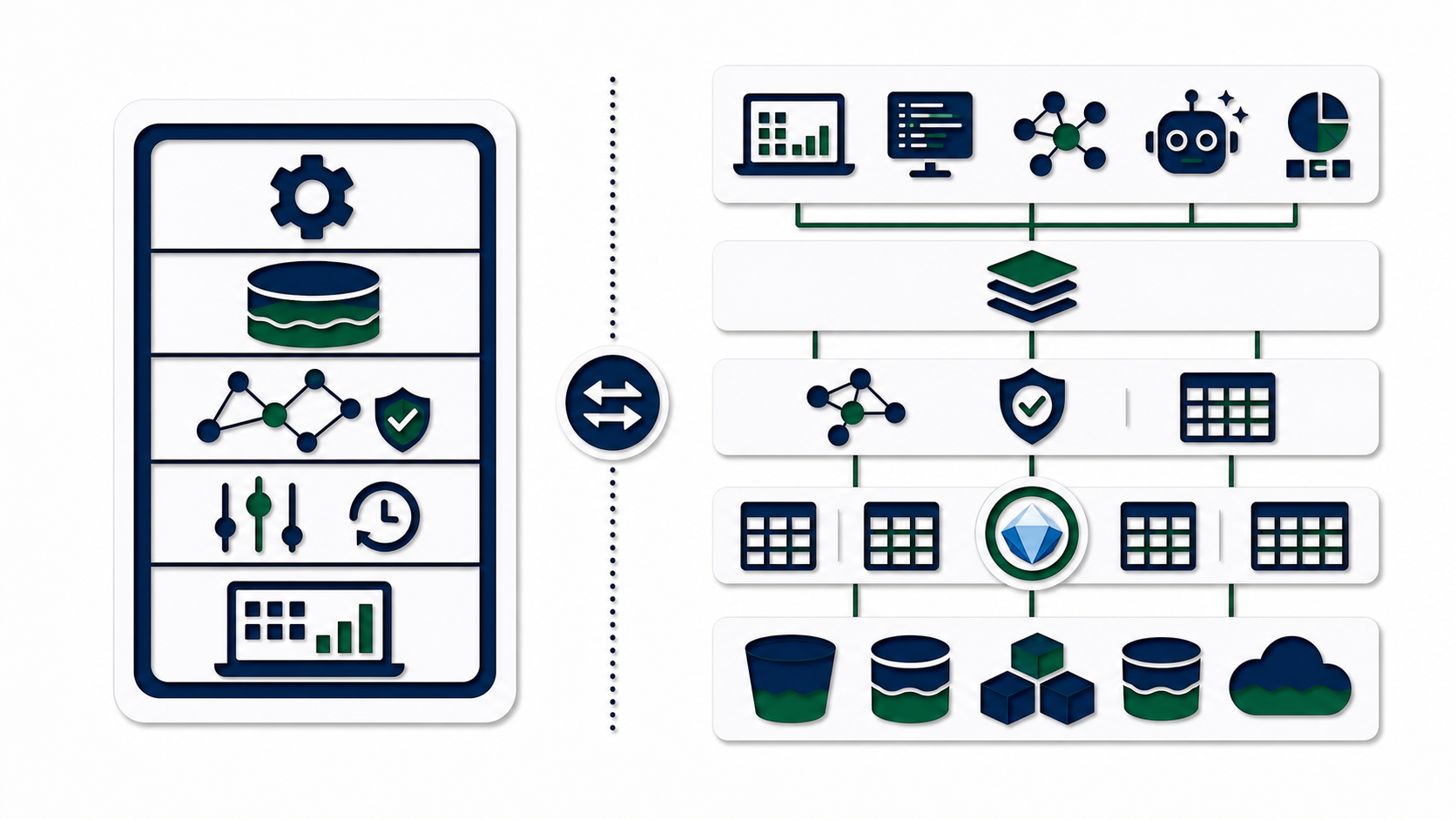
What Managed Tables Simplify
Managed tables exist for good reasons. Data teams do not want to spend every week hand-tuning table maintenance. They do not want to write custom compaction scripts forever. They do not want every engine to interpret table metadata slightly differently. They want reliable defaults.
A managed table service can simplify table creation, file optimization, metadata cleanup, credential handling, access integration, and performance tuning. It can give less specialized teams a smoother path to production. It can reduce the number of knobs teams need to understand before they get value from open table formats.
That matters. Operational simplicity is not a small benefit. Many lakehouse projects struggle because the team underestimates maintenance. Small files pile up. Metadata grows. Partitions are chosen poorly. Snapshot expiration is forgotten. Access policies drift. Query performance becomes inconsistent. A managed service can help prevent those problems.
The question is not whether managed tables are useful. They are. The question is what tradeoffs come with the management boundary.
What Managed Tables Can Centralize
Managed tables may centralize more than table maintenance. Depending on the implementation, the provider may control the catalog, optimization policies, credential flow, supported engines, write paths, audit surface, and performance features.
That centralization can be convenient. It can also reduce flexibility.
If only one engine can write safely, multi-engine architecture is limited. If the catalog is not broadly accessible, open table data becomes harder to share. If optimization behavior is opaque, teams may struggle to explain cost and performance. If credentials are managed in a platform-specific way, external engines may require special integration. If semantic definitions live elsewhere, agents and users may get inconsistent answers.
None of this means managed tables are bad. It means architects need to inspect the boundary. What is open? What is portable? What can be changed later? What happens if another engine needs to participate? What happens if the organization wants a different catalog, security model, or optimization strategy?
Convenience should be purchased knowingly.
What Decoupled Catalogs Make Possible
A decoupled catalog separates table governance from a single query engine or managed table service. In an Iceberg architecture, the catalog is the control surface for table discovery and metadata operations. If that catalog exposes open interfaces, multiple engines can participate more safely.
This model gives teams more architectural freedom. They can choose different engines for batch, streaming, SQL, notebooks, and AI tools. They can preserve open table access across clouds. They can make catalog governance part of the enterprise platform rather than one compute service. They can standardize identity, roles, audit, and table ownership in a more portable way.
Decoupling does not mean less governance. It often requires more explicit governance. Teams must define who can write, who can alter schemas, which engines are approved, how maintenance is scheduled, and how policies are enforced. But that explicitness is healthy. It prevents "managed" from becoming a synonym for "hidden."
Projects such as Apache Polaris and the Iceberg REST Catalog specification point in this direction. They make the catalog layer more open and more visible.
Table Format Convergence Raises the Stakes
As Iceberg, Delta, Hudi, and related lakehouse formats continue influencing each other, buyers increasingly expect table-format features such as transactions, schema evolution, time travel, and row-level operations. This convergence is good for the market because it raises the baseline.
But convergence can also make the control plane more important. If several platforms claim support for open table formats, the differentiator becomes how that support works in practice. Can external engines read and write safely? Can catalogs interoperate? Can policies be enforced consistently? Can users avoid duplicate semantic layers? Can agents query trusted assets without knowing platform-specific quirks?
The table format is the floor. The catalog and query layer decide whether the architecture becomes usable.
That is why decoupled catalogs are not an academic concern. They are part of how organizations preserve optionality as the table-format market matures.
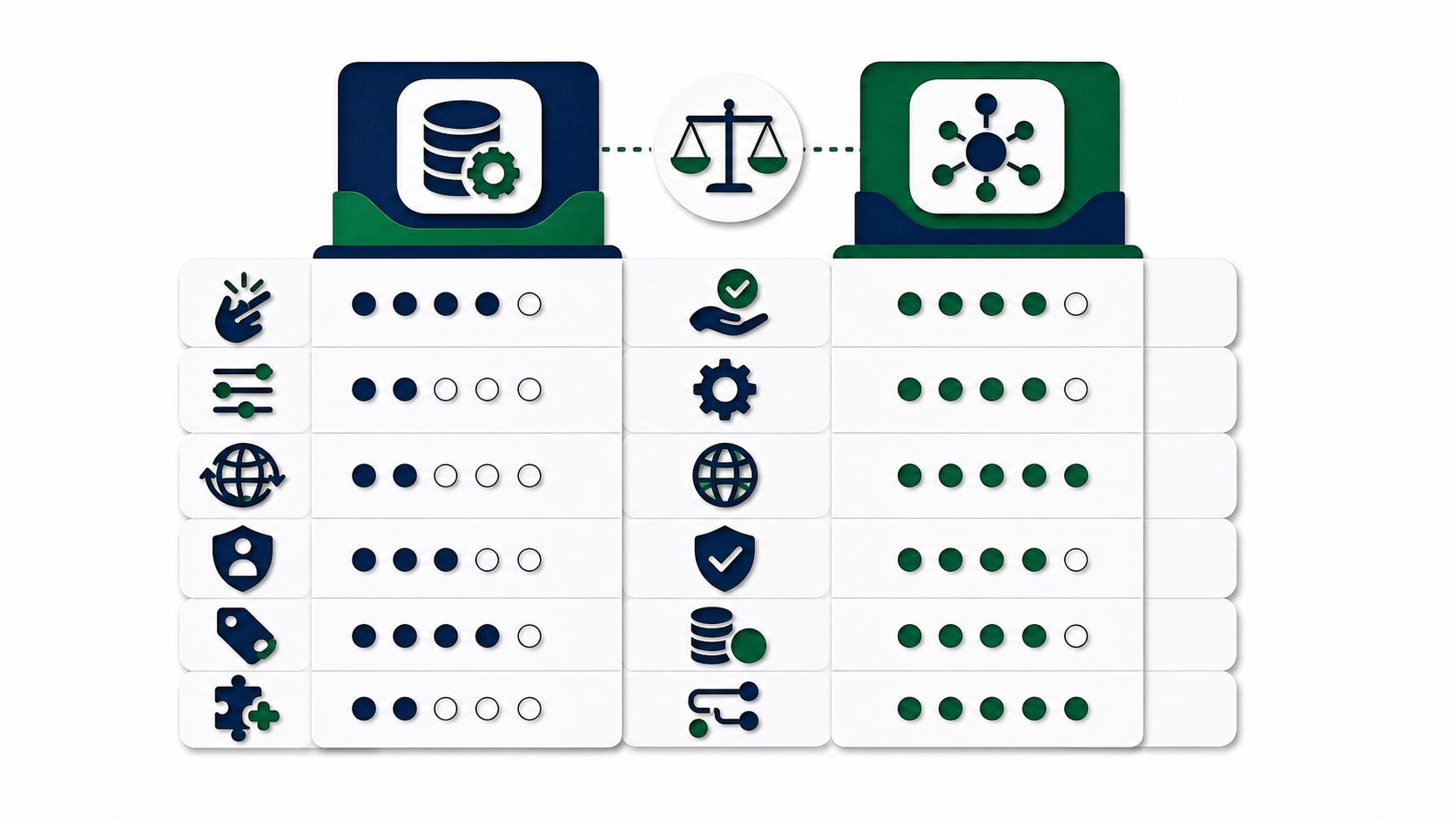
A Decision Matrix for Architects
The first dimension is operational capacity. If a team does not have the skills or staffing to manage table optimization, a managed table service may be the right starting point. A decoupled catalog without operating discipline can create its own problems.
The second dimension is engine diversity. If one engine handles almost every workload, a managed model may be sufficient. If the organization needs Spark, Flink, Dremio, Trino, notebooks, BI, and agents over the same data, decoupling becomes more attractive.
The third dimension is governance complexity. Regulated data, multi-tenant access, agent identities, and cross-cloud policies increase the need for a catalog and access model that can be inspected and controlled.
The fourth dimension is portability. If the organization wants to avoid long-term dependence on one platform's catalog and optimization path, decoupled architecture deserves serious consideration.
The fifth dimension is performance. Managed tables may offer strong built-in optimization. Decoupled architectures need a performance layer that keeps open data fast. This is where acceleration and autonomous performance become important.
The sixth dimension is AI readiness. Agents need semantic context, auditability, tool boundaries, and consistent policy. If those live inside a narrow platform boundary, agentic analytics becomes harder to generalize.
The decision is rarely binary. Many organizations will use managed tables in some places and decoupled catalogs in others.
The Hybrid Pattern
The most realistic architecture for many enterprises is hybrid. Use managed tables where operational simplicity matters and lock-in risk is low. Use decoupled catalogs where multi-engine access, governance portability, or long-term control matters more.
For example, a team might use a managed table service for departmental analytics or isolated workloads. It might use a decoupled Iceberg catalog for enterprise data products that serve many engines and agents. It might federate to systems that are not ready to move. It might gradually promote high-value datasets into open catalog governance.
This hybrid pattern acknowledges reality. Organizations do not modernize all at once. They adopt tools at different speeds. Some workloads need convenience. Others need control.
The key is to avoid accidental architecture. Make the choice table by table, domain by domain, based on explicit criteria.
Security and Credential Boundaries
Security is one of the clearest places where the managed-versus-decoupled choice matters.
In a tightly managed table service, credential handling may be simpler because the service controls much of the access path. That can be good if the service integrates well with enterprise identity and audit systems.
In a decoupled model, more components participate. Catalogs, engines, storage systems, and agents need carefully scoped access. That complexity has to be managed through identity propagation, short-lived credentials, policy enforcement, and audit trails.
The decoupled model can be more flexible, but flexibility increases the need for discipline. Agents should not receive broad storage credentials. Engines should not use shared super-user identities. Maintenance services should have narrow permissions. Catalog operations should be logged.
The mature architecture is not the one with the fewest moving parts. It is the one where the moving parts have clear responsibilities.
Semantic Layers and Business Meaning
The catalog tells systems where tables are and how to operate on them. It does not automatically tell the business what the data means.
That is why semantic layers matter in both managed and decoupled models. A table named orders does not define recognized revenue. A column named status does not explain which statuses count as active. A partition by date does not explain fiscal calendars.
As agents become more involved in analytics, semantic definitions become part of the platform contract. The agent should know which metrics are approved, what dimensions are allowed, which datasets are certified, and what freshness expectations apply.
If semantic definitions are tied to one tool, the organization may end up with open tables but closed meaning. That is another kind of lock-in. A strong lakehouse architecture makes semantic assets reusable across BI, APIs, notebooks, and agents.
This is a major reason the Dremio Lakehouse approach fits the direction of the market. Open tables need fast query access, but they also need meaning.
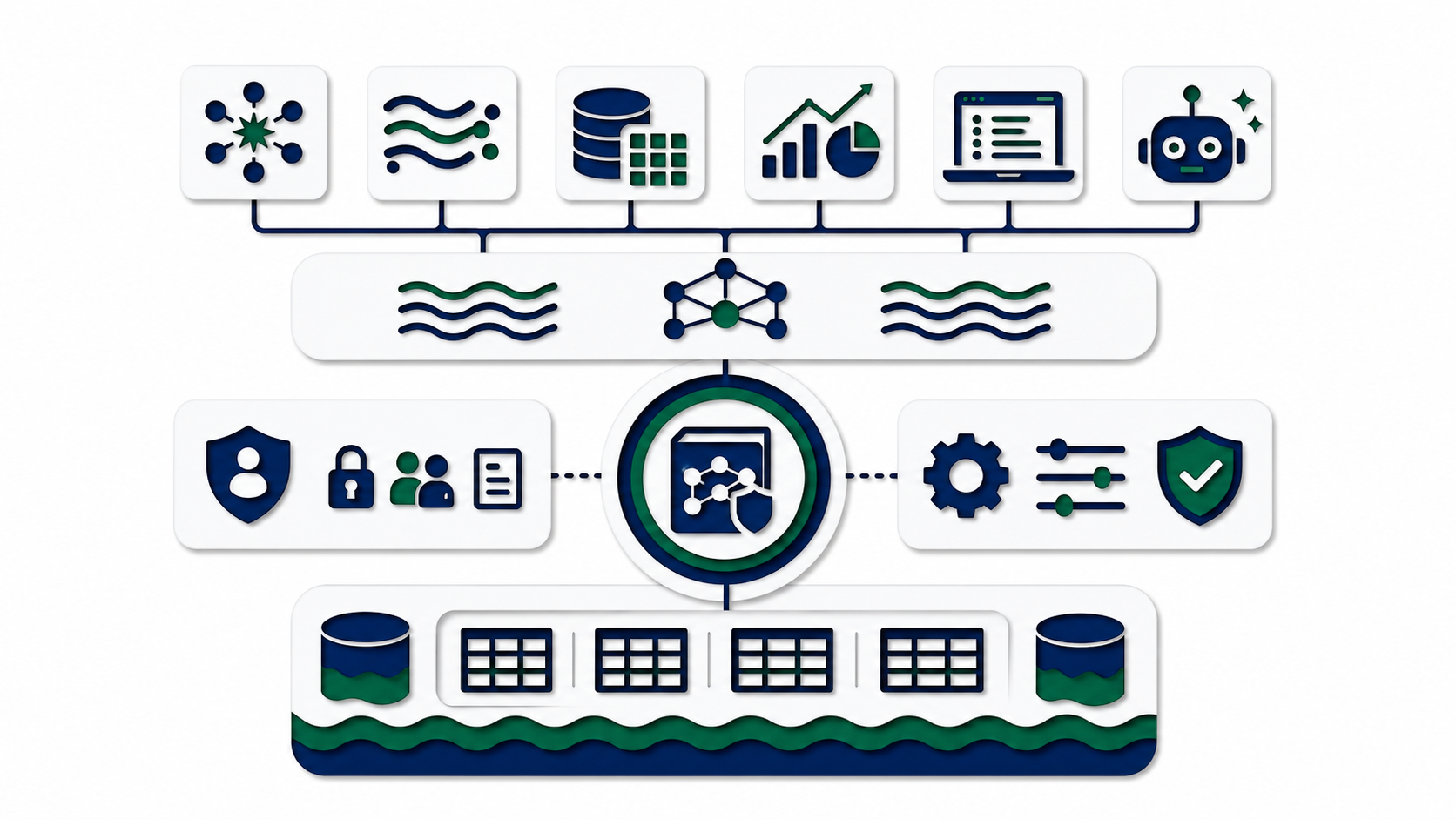
Why This Matters for Agentic Workflows
Agents make architectural boundaries more visible. A human analyst may know that one table should be queried through a managed service and another through an open catalog. An agent needs that context encoded in tools, policies, and metadata.
If the architecture is fragmented, the agent may have to navigate multiple catalogs, metric definitions, access models, and query endpoints. That increases the chance of wrong answers or policy mistakes.
A decoupled catalog and semantic layer can give agents a more consistent view of the data estate. The agent does not need to know every storage detail. It needs approved tools that expose trusted assets, definitions, and query capabilities.
Managed tables can still participate. The question is whether they can be represented in the broader lakehouse context without becoming isolated islands.
What This Means for the Lakehouse
This topic highlights the importance of architecture above the file layer. If open table formats win, organizations still need a way to query them quickly, govern them consistently, federate across sources, and expose semantic meaning to users and agents.
An open lakehouse approach is compelling because it does not require every dataset to be swallowed into one warehouse before it becomes useful. It assumes open data, distributed systems, and multiple consumers. It treats query performance, federation, and semantic access as central.
That does not mean every managed table service is a dead end. It means teams should preserve enough openness that managed convenience does not become long-term constraint.
Practical Recommendations
Start by classifying tables. Which are enterprise data products? Which are departmental? Which are temporary? Which are sensitive? Which need multi-engine writes? Which are mostly read-only?
Choose catalog strategy by domain. High-value cross-engine datasets deserve stronger decoupled governance. Simpler workloads may benefit from managed tables.
Define write contracts. Not every engine should write every table. Specify which systems can append, merge, compact, alter schemas, and expire snapshots.
Make semantic definitions portable. Do not let business meaning live only in one dashboard tool.
Measure operational burden. If decoupling creates maintenance work the team cannot handle, invest in automation or use managed services where appropriate.
Test interoperability. Do not assume every engine handles every table feature the same way.
Plan for agents. Expose governed tools and certified semantic assets, not broad raw table access.
Lifecycle Controls Matter More Than Labels
Whether a table is managed or decoupled, it needs lifecycle controls. A production table should have an owner, service-level expectations, retention policy, schema-change process, access review cadence, and maintenance plan. Without those controls, the architectural label does not matter very much.
For managed tables, lifecycle controls should clarify what the service handles and what the data team still owns. The service may compact files, clean metadata, or optimize layout. The data team still owns business correctness, access intent, semantic definitions, and consumer communication.
For decoupled catalogs, lifecycle controls should clarify which platform service owns catalog availability, which engines can write, which maintenance jobs are approved, and how table health is monitored.
This is especially important for agentic analytics. Agents need to know whether a table is experimental, certified, restricted, stale, deprecated, or under migration. Those lifecycle states should be machine-readable. Otherwise, an agent may treat a temporary table as if it were trusted business infrastructure.
Cost Models Are Different
Managed tables often bundle convenience into a platform cost model. Teams may pay for storage, maintenance, optimization, and query through a related service structure. That can make budgeting simpler, but it can also make it harder to separate the cost of storage from the cost of compute or optimization behavior.
Decoupled catalogs expose more choices. Storage may live in one place, the catalog in another, query engines in several places, and optimization services elsewhere. This can reduce lock-in and improve workload fit, but it also requires better cost attribution.
The right model depends on the organization. A smaller team may prefer managed simplicity even if it gives up some flexibility. A larger enterprise may want decoupled control because different domains have different cost, performance, and compliance needs.
The key is to measure cost at the data product level. How much does a table cost to store, maintain, query, accelerate, and govern? Which consumers use it? Which agent workflows depend on it? Cost transparency helps teams decide whether managed convenience or decoupled control is producing the better outcome.
A Domain-by-Domain Example
Consider a company with three domains: marketing analytics, finance reporting, and AI product telemetry.
Marketing analytics may benefit from managed tables. The data is important, but the workload may be mostly dashboard-driven and contained inside one platform. If the managed service keeps performance stable and governance simple, that may be the right choice.
Finance reporting may require decoupled catalog governance. The data has strict access rules, audited definitions, and multiple consumers across BI, close processes, and executive reporting. Engine choice and semantic consistency may matter more than convenience.
AI product telemetry may need a hybrid pattern. Raw event traces may land in open Iceberg tables. Some high-volume maintenance may be automated. Curated metrics may sit behind a semantic layer. Agents may access only certified views. The catalog has to coordinate multiple consumers without exposing raw sensitive payloads broadly.
This example shows why the decision should not be made once for the whole company. Different data domains have different risk profiles and operating needs.
What Buyers Should Ask Vendors
Ask whether tables remain accessible through open Iceberg semantics if you change engines.
Ask whether the catalog can be accessed through standard interfaces.
Ask which operations external engines can perform safely: read, append, merge, delete, alter schema, compact, and expire snapshots.
Ask how storage credentials are scoped for external engines and agents.
Ask whether table optimization policies are visible and adjustable.
Ask how semantic definitions are exposed beyond one BI surface.
Ask how audit logs connect user identity, engine identity, table snapshot, and query execution.
Ask what happens if the organization wants to move catalog governance later.
These questions help buyers understand whether an "open table" is open in the ways that matter operationally.
Agent Tool Design Depends on the Choice
Agent tools should reflect the table-management model. In a managed-table environment, the safest tools may expose approved views, certified metrics, and limited query execution through the managed platform. In a decoupled-catalog environment, the tools may need to call a semantic layer, query engine, catalog service, and policy service separately.
Neither pattern is inherently better. The risk comes from exposing the wrong abstraction. An agent should not need to understand every file path, catalog property, or optimization setting. It should understand trusted analytical assets, allowed actions, freshness, lineage, and policy outcomes.
This is another reason table-format convergence does not end the architecture discussion. If several platforms can claim Iceberg support, the question becomes which platform exposes the right agent-safe abstractions. A table can be technically open while the agent interface remains narrow, opaque, or hard to audit.
The best designs keep raw administrative power away from agents and give them governed tools that map to business intent.
That keeps automation useful without letting convenience bypass the platform responsibilities that make the lakehouse trustworthy.
It is a design choice, not a default.
Architects should make it deliberately.
That discipline compounds.
The Direction of Travel
The market is converging on open table formats, but that does not make architecture decisions disappear. It moves the debate up a layer. Catalogs, semantics, optimization, identity, and agent access become the new design surface.
Managed tables will remain attractive because they reduce operational work. Decoupled catalogs will remain attractive because they preserve freedom. The mature enterprise architecture will often use both deliberately.
The mistake is to treat openness as a checkbox. A table can be open while the operating model remains closed. A managed service can use an open format while limiting engine access. A decoupled catalog can preserve choice while requiring stronger operations.
The best lakehouse architectures make these tradeoffs explicit. They keep data portable, governance inspectable, performance strong, and semantic meaning reusable.
That is why the Dremio Lakehouse approach feels aligned with where the market is going. As table formats converge, the value moves toward platforms that make open data usable across engines, clouds, humans, and agents.
For more of my thinking on data lakehouse and AI architecture, explore my books at books.alexmerced.com. To try a modern Agentic Lakehouse experience, visit dremio.com/get-started.