Article
The 2026-07-28 Model Context Protocol Release Candidate: What the Stateless Spec Means for Data Platforms
Cross-posted. This article's canonical home is Alex Merced's Lakehouse Blog.
The date in this topic matters. Today is July 6, 2026. A release candidate dated July 28, 2026 is still in the future. That means this article should not describe the release candidate as published or summarize details that are not public yet.
What we can do is use the date as a watch item. If the Model Context Protocol continues moving toward stateless or more horizontally scalable server patterns, data platforms should pay attention. Stateless MCP patterns would matter because analytics agents may generate many short-lived tool calls across metadata, semantic definitions, query engines, catalogs, and workflow systems.
The important point is that MCP is an interface layer. It can standardize how agents call tools and access resources. It does not replace the data platform underneath. An agent still needs identity, governance, semantic grounding, query performance, lineage, cost controls, and auditability.
That is why the Dremio-positive conclusion is architectural. MCP can make agent interfaces more standard, but an Agentic Lakehouse supplies the governed data context those interfaces need.
What MCP Already Standardizes
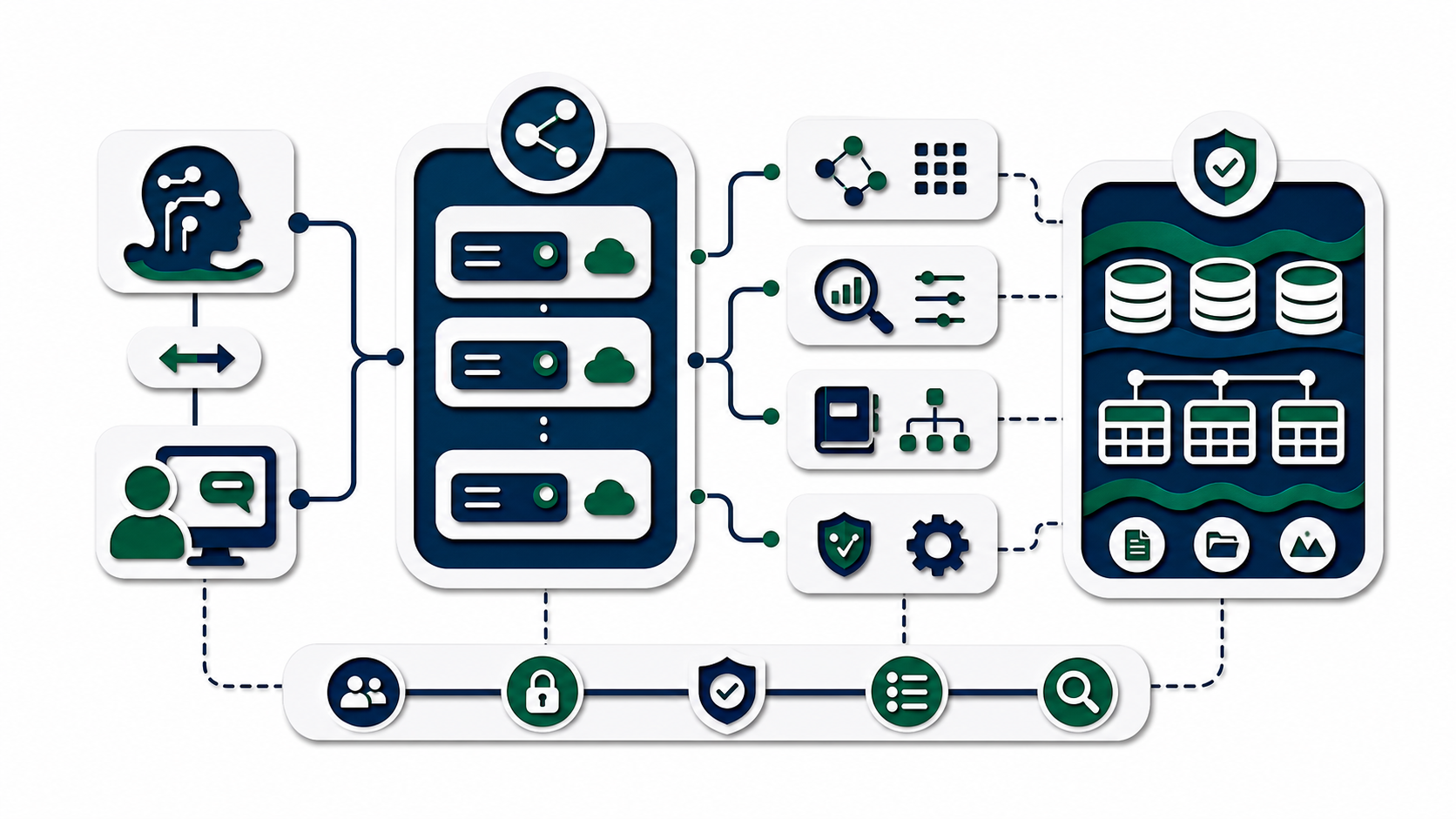
The Model Context Protocol gives AI applications a way to connect to servers that expose tools, resources, and prompts. In practical terms, it gives developers a structured way to let agents interact with external systems.
For data platforms, MCP is interesting because analytics agents need tools. They need to look up metric definitions, inspect schema, run governed queries, check data freshness, retrieve lineage, and request actions. Without a common tool interface, every integration becomes custom.
MCP does not decide which table is trusted. It does not define a metric. It does not enforce lakehouse policy by itself. It does not make a query fast. It defines an interaction pattern between AI systems and tools.
That separation is healthy. The AI layer should not own the entire data platform. It should call governed services.
Why Stateless Patterns Matter
Stateless server patterns matter because agent workloads can scale differently from human workflows.
A human analyst may run one query, inspect a result, and think. An agent may call a metadata tool, retrieve a metric contract, run a query, validate freshness, inspect lineage, ask another query, and produce an answer in one flow. Multiply that by many users or automated workflows, and the tool layer becomes a real service tier.
Stateful servers can be useful, but they can complicate scaling, failover, and isolation. A stateless MCP-style service could make it easier to run multiple server instances behind a load balancer, scale based on demand, isolate requests, and recover from failures.
For data platforms, this matters because tool calls may sit on critical paths. If the agent waits on metadata lookup or query submission, the user experience suffers. If the tool layer cannot scale, agentic analytics becomes fragile.
Stateless Does Not Mean Context-Free
The word stateless can be misleading. A stateless server should not mean the system forgets context. It means the server does not rely on local process memory to preserve session state.
The context still exists. It may live in signed tokens, external stores, request metadata, durable logs, semantic services, query histories, or workflow systems. For analytics, the tool server still needs to know user identity, permissions, current task, approved datasets, and audit correlation.
The design challenge is to preserve the right context without making the server instance itself the source of truth.
This is especially important for data access. A stateless MCP server should not become a thin proxy that loses accountability. Each request still needs identity, policy, and logging.
Identity Propagation
Identity is the first data-platform concern. When an agent calls a tool, the platform needs to know who or what is behind the call.
Is the agent acting on behalf of a user? Is it running as a scheduled workflow? Is it a service identity? Does it have delegated authority? What role applies? Which data can it access?
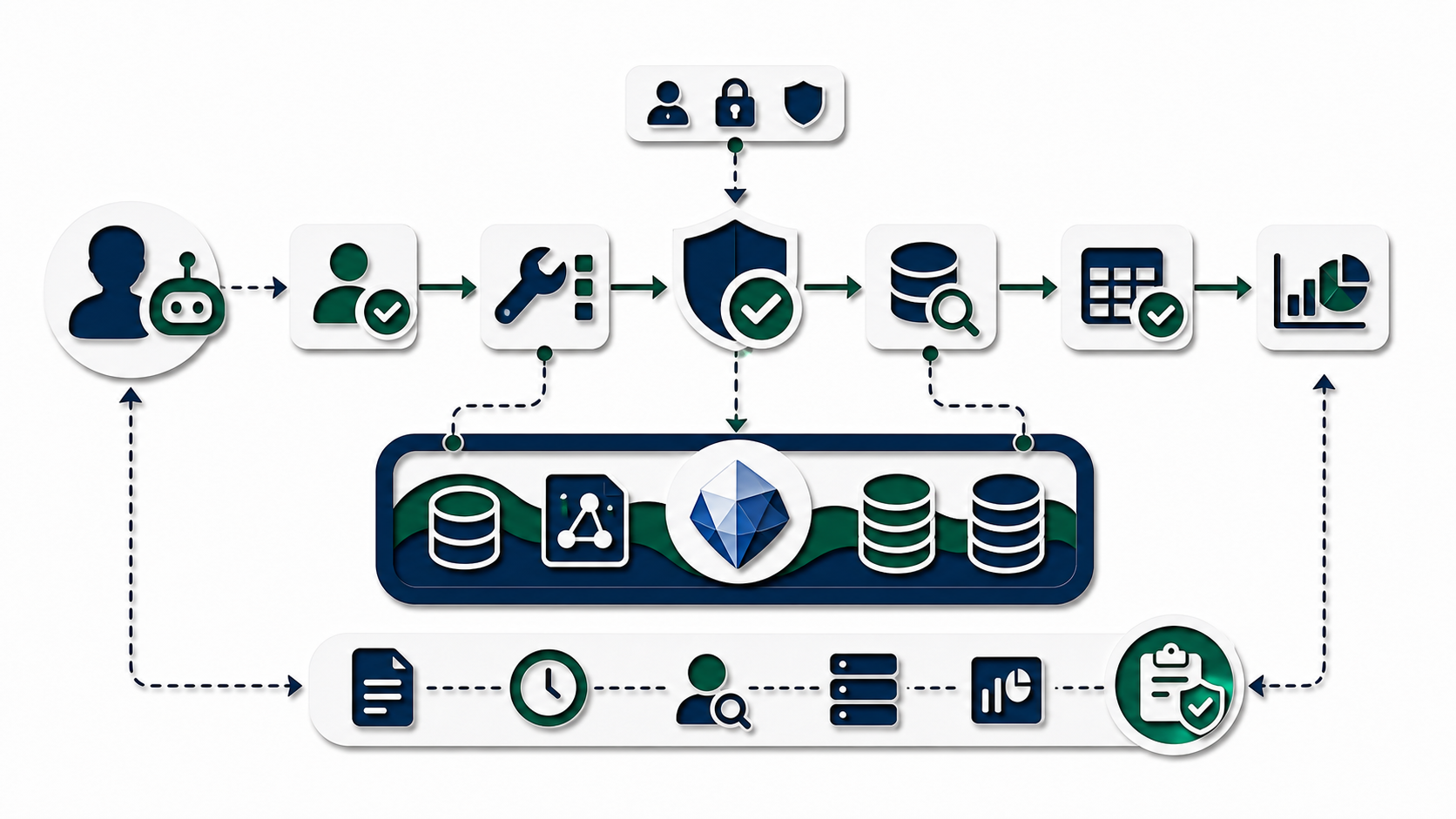
Stateless MCP patterns should make identity propagation explicit. The server should not rely on hidden session state or broad service credentials. It should receive or resolve the identity for each request, apply policy, and log the result.
This is where lakehouse governance becomes central. The tool call should flow through catalog, semantic, and query controls rather than bypass them.
Auditability at Tool Speed
Agentic systems can generate many tool calls quickly. Audit systems need to keep up.
A good audit record should capture the user or agent identity, the tool called, input parameters, semantic assets involved, query text or logical plan where appropriate, table version or snapshot where possible, policy decisions, result status, and correlation to the broader task.
This is not only for compliance. It is also how teams debug agent behavior. If an agent answers incorrectly, the team needs to know whether it selected the wrong metric, queried stale data, lacked access, or misinterpreted a result.
Stateless server architecture can help if every request produces durable, structured audit records. It can hurt if the system spreads responsibility across services without a coherent trace.
Tool Design for Data Platforms
Data-platform tools should be narrow and intentional.
A tool that runs arbitrary SQL may be useful for expert workflows, but it is risky as a default agent capability. Better tools might include:
- describe approved dataset
- retrieve metric contract
- run governed metric query
- check table freshness
- inspect lineage for an asset
- compare current value to baseline
- request workflow approval
These tools map to analytical intent. They also give the platform more control over validation and policy.
MCP can expose these tools. The lakehouse decides what they mean and how they are governed.
MCP and the Semantic Layer
The semantic layer should be one of the main resources exposed through MCP-style interfaces. Agents need metric definitions, dimensions, relationships, owners, freshness, and lifecycle states.
If an agent gets direct table access without semantic context, it will guess. If it gets semantic context without query access, it cannot answer. The tool layer should connect both.
A strong MCP server for analytics would likely expose semantic resources and query tools together. The agent could retrieve a metric contract, ask for allowed dimensions, run a governed query, and receive a response with provenance.
This is the difference between an agent that queries data and an agent that understands the analytical contract it is using.
The Agentic Lakehouse Stack
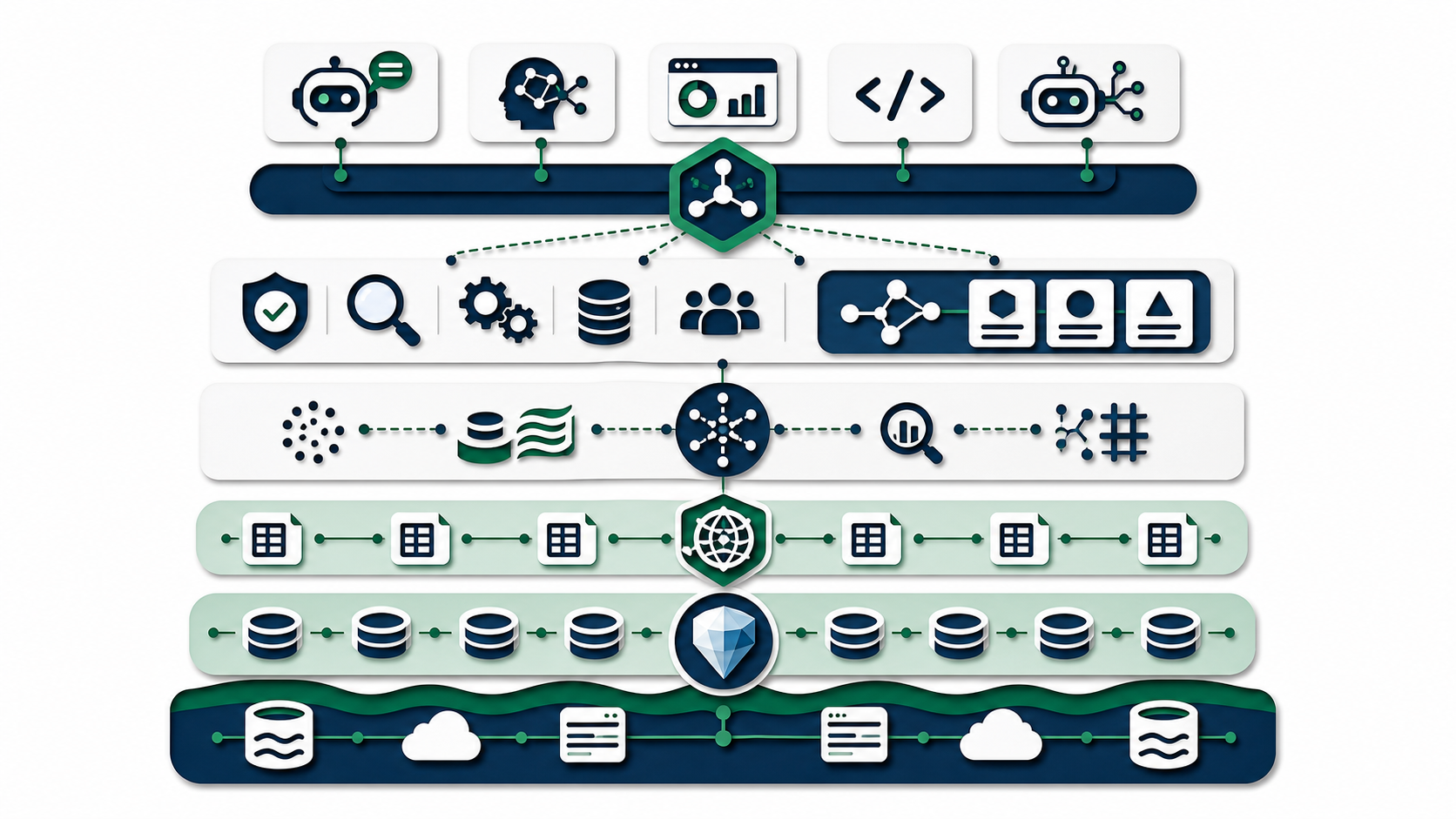
In an Agentic Lakehouse, MCP sits near the top of the stack.
At the bottom is storage, often object storage.
Above that are open table formats such as Iceberg.
Above that is the catalog, which governs table metadata and operations.
Above that is the query layer, which provides SQL, federation, acceleration, and policy enforcement.
Above that is the semantic layer, which defines business meaning.
Above that are MCP tools, APIs, and agent interfaces.
The order matters. MCP should expose governed capabilities from the layers below it. It should not become a shortcut around them.
Why Dremio Fits This Pattern
Dremio's Agentic Lakehouse narrative fits because MCP increases the value of a strong data foundation. If agents can call tools more consistently, buyers will ask what those tools actually connect to.
Do they connect to open tables? Can they query across systems? Do they use semantic definitions? Are they governed? Are they fast enough for multi-step workflows? Are they auditable?
Dremio's strengths around open lakehouse data, query federation, semantic access, and acceleration map well to those questions. MCP does not replace those capabilities. It creates a cleaner way for agents to use them.
Risks to Watch
The first risk is tool sprawl. If every team exposes its own MCP tools without shared governance, agents will see inconsistent capabilities.
The second risk is identity confusion. If tool calls are not tied to clear identities, audit and policy weaken.
The third risk is semantic bypass. Agents may call raw query tools instead of approved metrics.
The fourth risk is cost growth. Agents may generate many small calls that add up.
The fifth risk is unclear state. Stateless servers still need durable context and traces.
The sixth risk is future-spec overclaiming. Teams should implement against released specifications and treat future releases as watch items until public.
Preparation Checklist
Inventory the tools agents need.
Separate metadata, semantic, query, validation, and action tools.
Define identity propagation for every request.
Log tool calls with durable correlation IDs.
Prefer metric and semantic tools over arbitrary SQL.
Rate-limit expensive tools.
Test failure behavior.
Keep action tools behind approval.
Review future MCP spec changes before changing production contracts.
Deployment Patterns for Stateless Tool Servers
A stateless MCP-style tool layer for analytics can be deployed in several ways.
The first pattern is a centralized tool gateway. Agents call one gateway, and the gateway routes requests to semantic services, query engines, catalogs, and workflow systems. This can simplify governance because identity, logging, and policy enforcement are concentrated in one layer.
The second pattern is domain-specific tool servers. Finance, product, security, and operations each expose tools for their own certified data products. This can align with data ownership, but it requires shared standards for identity, audit, naming, and lifecycle.
The third pattern is embedded tool access inside applications. A BI tool, notebook, or internal portal exposes MCP-compatible tools for its own context. This can improve user experience, but it can fragment governance if not coordinated.
The best enterprise architecture may combine these patterns. A central platform defines identity, policy, and audit standards. Domains expose governed tools. Applications consume those tools without inventing new definitions.
Statelessness helps each pattern scale, but governance keeps the patterns from drifting apart.
Where State Should Live
If the MCP server is stateless, state has to live somewhere else. For data platforms, there are several kinds of state.
Identity state lives in identity providers, tokens, sessions, or delegation services.
Task state lives in the agent host, workflow engine, or durable orchestration layer.
Semantic state lives in metric catalogs, semantic layers, and data product registries.
Table state lives in catalogs and table metadata.
Query state lives in query engines and job histories.
Audit state lives in logs and observability systems.
Approval state lives in workflow systems.
The tool server should connect these states without becoming the hidden owner of them. That makes failures easier to recover from. If one server instance disappears, another can handle the next request because durable systems hold the important context.
This is the real promise of stateless design for analytics: reliability through clear state ownership.
Concrete Tool Examples
A useful analytics MCP server might expose a tool to list certified metrics for a user. That tool would use identity, semantic metadata, and access policy to return only the metrics the user can access.
Another tool might describe a metric. It would return definition, formula, grain, owner, freshness, tests, lineage, and allowed dimensions.
A third tool might run a governed query. It would accept a metric name, filters, and dimensions rather than arbitrary SQL. The query service would enforce policy and return results with provenance.
A fourth tool might check data freshness. It would look at table metadata, pipeline status, and quality checks.
A fifth tool might inspect lineage. It would show upstream tables, transformations, and downstream consumers.
A sixth tool might request an action. It would create a workflow item rather than directly changing a production system.
These tools are deliberately constrained. They help agents do useful work without giving them administrative control over the lakehouse.
Rate Limits and Budgets
Agentic systems need rate limits. A human may ask one question. An agent may ask ten follow-up questions. A poorly designed agent may ask hundreds.
Each tool should have limits based on user, agent identity, cost, data sensitivity, and workflow type. Metadata tools may be cheap. Query tools may be expensive. Action tools may be high risk.
Budgets can be soft or hard. A soft budget warns the agent or user that a workflow is becoming expensive. A hard budget stops execution. High-risk or high-cost tools can require approval.
This is especially important for stateless servers because scaling out is easy. Without budgets, the tool layer may absorb load while the query engine, catalog, or storage layer suffers.
The goal is not to make agents timid. The goal is to make their activity observable and bounded.
Production Readiness Tests
Before exposing MCP-style data tools widely, test failure behavior.
What happens when the semantic layer is unavailable?
What happens when the catalog is slow?
What happens when the query engine rejects a request?
What happens when the user lacks access?
What happens when data is stale?
What happens when the agent retries the same request?
What happens when a tool returns partial results?
What happens when a future spec change affects compatibility?
The answers should be boring. The tool should fail clearly, log durably, and avoid leaking sensitive information.
Human Experience Still Matters
Even in a technical article about stateless MCP servers, the human experience matters. Users need to understand why an agent refused, why a result is delayed, or why a tool requires approval.
A good tool layer should produce explanations that are understandable. "Policy denied" is technically clear but not always useful. A better response might say that the requested metric is restricted at customer-level grain and can be viewed only as an aggregate for the user's role.
This is another place semantic metadata helps. It lets the system explain policy in business terms.
Why Future Specs Should Not Drive Present Commitments
Because the July 28, 2026 release candidate is future-dated, teams should avoid building production commitments on assumptions about it. Track the spec. Prototype where useful. But keep production contracts tied to released behavior.
This is especially important for enterprise data platforms because tool interfaces become part of governance. If a tool contract changes, audit, policy, and agent behavior may change with it.
Treat future specs as direction. Treat released specs as contracts.
How This Prepares the Agentic Lakehouse
Stateless MCP patterns prepare the Agentic Lakehouse by making the interface layer more scalable and standard. Agents can call tools through a clearer protocol. Platform teams can expose governed capabilities without writing custom integrations for every AI application.
But the value still comes from the lakehouse services underneath. The semantic layer defines meaning. The query layer executes. The catalog governs tables. Iceberg stores table state. Observability records behavior. Workflow systems manage approvals.
The MCP layer should make those services easier to use, not replace them.
Architecture Checklist for Data Teams
Start by listing the data tasks agents should perform. Separate discovery, definition lookup, query execution, validation, lineage, and workflow requests.
For each task, decide whether it should be exposed as an MCP tool, a resource, or not exposed at all.
Define the identity model. Decide how user identity, agent identity, and workload identity will flow into every request.
Define the authorization model. Decide which roles can call each tool and which datasets each tool can touch.
Define the semantic model. Make sure agents can retrieve approved definitions rather than infer them.
Define the query model. Prefer governed metric queries and semantic views over raw SQL for common workflows.
Define the audit model. Every request should have a correlation ID and durable log record.
Define the cost model. Expensive tools need budgets, rate limits, and monitoring.
Define the approval model. Action tools should create controlled workflow requests unless execution has been explicitly approved.
Define the compatibility model. Track which MCP spec version each tool server supports.
This checklist makes MCP adoption a platform decision instead of a connector experiment.
Common Failure Modes
The first failure mode is exposing too much power too early. An arbitrary query tool is easy to build and hard to govern.
The second is treating statelessness as a reason to ignore workflow context. The context still matters. It just should not live only in process memory.
The third is weak identity propagation. If every tool call runs through one broad credential, the architecture loses accountability.
The fourth is inconsistent tool semantics. If two teams expose different definitions of the same metric, agents will inherit the confusion.
The fifth is missing observability. Without traces, teams cannot explain agent behavior.
The sixth is future-spec dependency. Building production promises on unreleased protocol behavior creates avoidable risk.
These failure modes are preventable when the MCP layer is treated as part of the data platform control surface.
What to Watch on July 28
If a release candidate appears on July 28, the first things I would inspect are transport expectations, session behavior, authentication guidance, server capability discovery, tool result structure, error handling, and compatibility notes. For data platforms, small protocol details can affect audit, policy, and scaling. The right response is careful review, not instant production change.
Future protocol work should improve the control surface, not become an excuse to skip platform design.
That is the practical standard.
It keeps architectures honest.
And teams safer.
Good.
The Direction of Travel
MCP is important because it can standardize the way agents interact with systems. For data platforms, that standardization is useful only if the underlying services are trustworthy.
A stateless MCP pattern would make agent tool layers easier to scale, but scale is not enough. The tool layer still needs identity, governance, semantic grounding, query performance, auditability, and cost control.
That is why the Agentic Lakehouse remains the more important architecture. MCP gives agents a doorway. The lakehouse decides whether the room behind that doorway is safe, useful, and governed.
For more of my thinking on data lakehouse and AI architecture, explore my books at books.alexmerced.com. To try a modern Agentic Lakehouse experience, visit dremio.com/get-started.